
Hypothermia Management: What Has (Really) Changed in 2025?
A Saturday Night in Cervinia
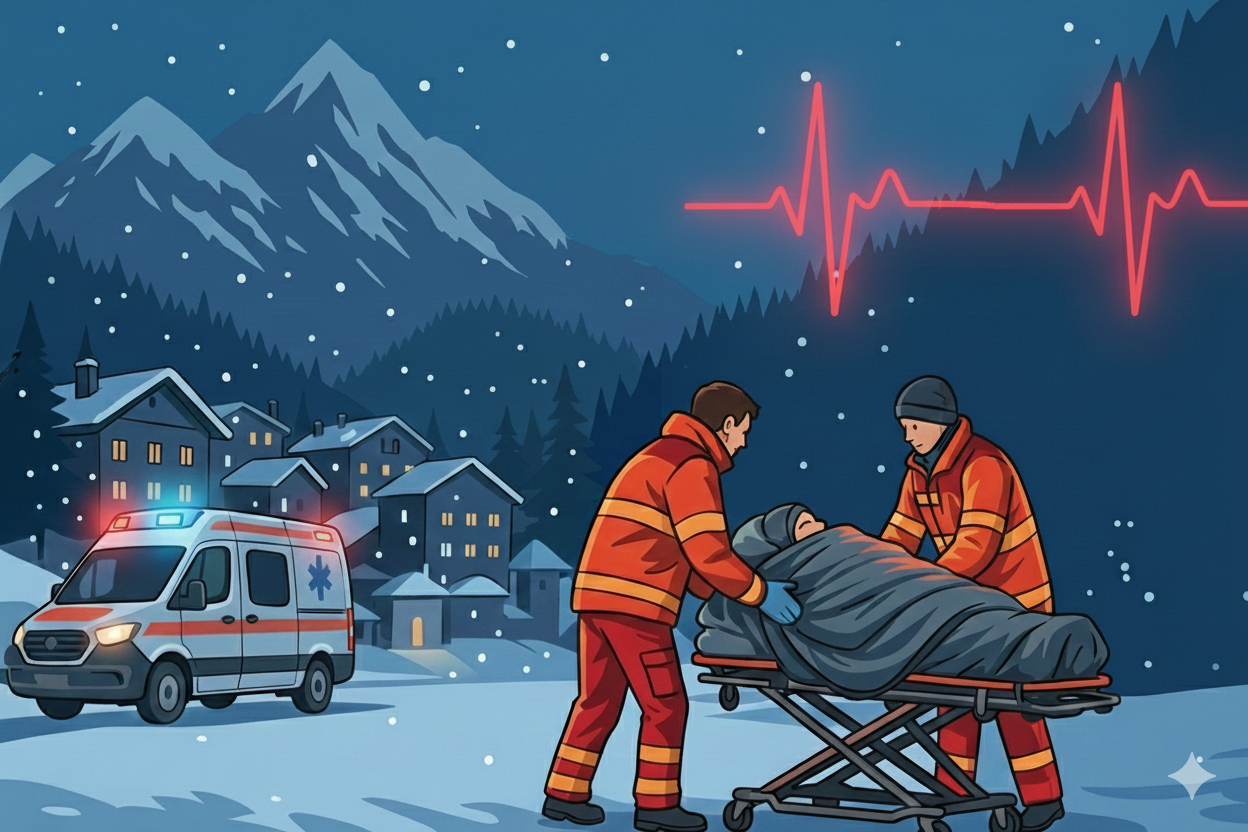
It's 11:47 PM on a Saturday night in January. The Valle d'Aosta 118 emergency dispatch center receives a call from a bartender in Cervinia: "There's a guy sitting on the bench outside the bar for at least an hour. At first we thought he was sleeping, but now he doesn't respond when we call him."
- When the ambulance arrives in the square, the external temperature reads -8°C with sustained wind. The man, approximately 40 years old, is sitting on the bench in a semi-composed position, dressed only in a light jacket and jeans. Next to him, two empty bottles of grappa. The first responder shakes him gently: "Sir, can you hear me?" No response. The skin is pale, waxy, cold to the touch. The radial pulse is not palpable.
- "I'll check the carotid," says the more experienced responder to his colleague, positioning two fingers on the carotid artery. Ten seconds. Twenty. Thirty. "There! Slow, but it's there. About 35 beats per minute."
- This is a classic case of moderate-to-severe hypothermia, made particularly insidious by alcohol intoxication. And it represents exactly the type of scenario that the 2025 international guidelines address – with some interesting updates worth knowing.
2025 Guidelines: Consolidation and Refinements
In October 2025, the new guidelines from the European Resuscitation Council (ERC) were published, following ILCOR updates. For those working in prehospital emergency care, especially in mountain environments, it's essential to understand what has been confirmed and what has been updated.
The principles consolidated by the Wilderness Medical Society Guidelines 2019 have been revalidated by the 2025 publications, confirming the soundness of the clinical approach to managing accidental hypothermia in the prehospital setting.
The 2025 updates, particularly from the ERC First Aid Guidelines, bring important methodological refinements: the concept of afterdrop is now explicitly addressed, with detailed recommendations on multilayer insulation and management of non-freezing cold injuries (NFCI). These updates translate into formal guidelines the practices that mountain rescue professionals have developed in the field over the years.
Classification: Clinical Signs First in the Field
Before delving into the updates, it's essential to understand how to correctly assess severity in the field. The 2025 guidelines reiterate that in the prehospital setting, when we don't have a reliable measurement of core temperature, the severity of hypothermia should be estimated based on the Revised Swiss Staging System, which integrates level of consciousness (AVPU scale) and clinical signs. When possible, measuring core temperature with a low-reading thermometer remains a fundamental parameter to integrate into the assessment.

HT1 - Mild Hypothermia (32-35°C)
- Mental status: Alert - Awake and oriented
- Swiss Staging: HT1
- Characteristic signs: Shivering present and vigorous, cold and pale skin, impaired coordination, slurred speech
- Risk of cardiac arrest: Low if the patient remains alert
- Key management: Passive rewarming, prevention of afterdrop
HT2 - Moderate Hypothermia (28-32°C)
- Mental status: Responsive to Verbal or Pain - Altered consciousness, responds to verbal or painful stimuli
- Swiss Staging: HT2
- Characteristic signs: Shivering often absent or greatly reduced (caution: some moderately hypothermic patients may still shiver, especially if young and well-nourished), muscle rigidity, confusion, marked bradycardia (often <45 bpm)
- Risk of cardiac arrest: Moderate-to-high, the patient is extremely vulnerable to arrhythmias
- Key management: Aggressive thermal insulation, extremely gentle manipulation to avoid triggering ventricular arrhythmias, particularly ventricular fibrillation
Clinical note: Supraventricular arrhythmias (e.g., atrial fibrillation) are very common in moderate-to-severe hypothermia and tend to resolve spontaneously with rewarming; they do not require specific treatment per se.
HT3/HT4 - Severe Hypothermia (<28°C)
- Mental status: Unresponsive - Unconscious or in cardiac arrest
- Swiss Staging: HT3 (unconscious with signs of life) or HT4 (cardiac arrest)
- Characteristic signs: Absence of shivering, extreme rigidity, possible ventricular arrhythmias, absent or barely perceptible pulse (check for 60 seconds)
- Risk of cardiac arrest: Extremely high (often already present on arrival)
- Key management: Continuous or intermittent CPR, passive insulation (packaging as complete as possible compatible with compressions), transport to ECMO center
Our patient in Cervinia? Clearly in moderate-to-severe hypothermia: not responding to verbal stimuli, has lost shivering, presents marked bradycardia (35/min). Skin temperature suggests probably 28-30°C, but without an esophageal or rectal thermometer (which we rarely have in an ambulance), we rely on clinical signs.
ERC 2025 Updates: Focus on Afterdrop
The ERC 2025 First Aid Guidelines updates bring an important methodological evolution: for the first time in a mainstream guideline, afterdrop is formalized as a critical element of management, with detailed operational recommendations.
What Is Afterdrop?
Afterdrop is the phenomenon whereby the hypothermic patient's core body temperature continues to drop even after we have removed them from the cold environment and started rewarming. It may seem counterintuitive, but the pathophysiology is clear:
- During cold exposure, the body has maximally vasoconstricted the periphery to protect the core
- When we start rewarming (even just moving the patient), vasodilation occurs
- Cold blood from the periphery returns to the core, further lowering core temperature
- In the most severe cases, this can trigger lethal arrhythmias
Those who work in the mountains have always known this. How many times have we seen patients who were "fine" during recovery and then collapsed during transport? The 2025 guidelines formalize this concept, bringing the experience of wilderness medicine into mainstream recommendations.
Prevention of Afterdrop: Explicit and Detailed Recommendations
The ERC 2025 First Aid makes explicit and detailed a multilayer insulation protocol that translates into formal guidelines the best practices developed by wilderness medicine:
1. Inner Layer - Thermal Insulation
- Wool blankets, fleece, or insulating materials
- Gentle removal of wet clothing (NEVER tear or move abruptly)
- Replace with dry clothing when possible
2. Middle Layer - Vapor Barrier
Plastic sheet or waterproof material
Prevents evaporative cooling
2025 Update: This layer is now explicitly recommended, no longer just "if available"
3. Outer Layer - Wind Protection
- Thermal blankets or emergency blankets
- Physical protection from wind (move behind rocks, into shelters, etc.)
4. Ground Insulation
- Essential but often forgotten: Cold ground is one of the greatest heat thieves
- Place sleeping pads, blankets, backpacks – anything – between the patient and the ground
In the case of our patient in Cervinia, on the frozen bench, this means:
- First of all: spread folded blankets on the stretcher (don't place the patient directly on the cold stretcher surface)
- Lift him with coordinated and gentle movements (4 rescuers, synchronized maneuver)
- Wrap him in sequence: wool blanket → waterproof sheet → thermal blanket
- Strictly horizontal position during transport
- Ambulance already pre-heated to at least 24-25°C
Active Rewarming: When and How?
Another important subtlety of the 2025 guidelines concerns active rewarming. The ERC 2025 First Aid now recommends initiating active rewarming even in patients who no longer present shivering, a difference from previous indications that reserved it mainly for moderate-to-severe hypothermia.
Recommended Active Rewarming Techniques
Chemical Heat Packs
- Apply inside the multilayer insulation (not in direct contact with skin – risk of burns)
- Preferred positions: armpits, chest, upper back region
- Avoid: extremities (promotes cold venous return to the core)
Skin-to-Skin Contact
- Effective if you have available rescuers
- Position the "warm" rescuer next to the patient, both wrapped in the same insulation
- Particularly useful in prolonged wilderness scenarios
Active Thermal Blankets
- If available (rare in prehospital territorial care)
- Always follow manufacturer's instructions
In our Cervinia case, the rescuers apply chemical heat packs under the armpits and on the back, inside the wool blanket, before adding the waterproof barrier.
CPR in Severe Hypothermia: The (Immutable) Principles
Let's return to our patient. Alternative scenario: when the rescuers arrive, there is no carotid pulse even after 60 seconds of checking. Cardiac arrest in severe hypothermia. What to do?
The 2025 guidelines confirm the consolidated principles:
1. "Nobody Is Dead Until They Are Warm and Dead"
This mantra remains the cornerstone of management. Hypothermia offers extraordinary cerebral protection. There are documented cases of neurologically intact survival after over 6 hours of continuous CPR.
In the mountains, this means: unless there are obvious signs of death incompatible with life (decapitation, severed torso, completely frozen body, thoracic rigidity preventing compressions), do not declare death in the field in a hypothermic patient, even if they seem "obviously" dead.
2. Continuous CPR (or Intermittent When Necessary)
- Ideally: Uninterrupted CPR during the entire transport
- Realistically: In wilderness contexts, often impossible (rough terrain, need to move, etc.)
- Acceptable compromise: Intermittent CPR – at least 5 minutes of CPR, followed by maximum 5 minutes pause during movement
The approach to intermittent CPR comes from the work of the International Commission for Mountain Emergency Medicine (ICAR) and the Wilderness Medical Society; the [ANZCOR 2025](https://resus.org.au/) guidelines and the most recent recommendations have since adopted it, recognizing that in hostile environments it is impossible to guarantee continuous compressions during the entire transport.
3. Defibrillation: Differentiated Approach by Context
If the monitor shows VF (ventricular fibrillation) and the estimated temperature is below 30°C, recommendations vary based on context:
Wilderness Approach (WMS):
- In remote outdoor context: a single shock at maximum energy
- If not effective, defer further defibrillations until temperature exceeds 30°C
- Rationale: minimize interruptions to CPR and transport in difficult environment
ERC 2025 Approach (hospital/advanced EMS context):
- Defibrillation as per standard algorithm
- Up to three initial shocks
- Delay further attempts until temperature rises >30°C
In practice for EMS: Follow local protocols, which typically explicitly specify management of hypothermic VF. The common rationale is that the hypothermic myocardium is resistant to defibrillation, so repeated attempts beyond the specified limit are futile.
4. Medications: Dubious Efficacy in Extreme Cold
Pharmacological management in severe hypothermia is complex and varies between guidelines:
Below 30°C:
- Drug efficacy is very dubious and the risk of accumulation is real
- WMS approach (wilderness): Do not administer epinephrine until the patient has been rewarmed above 30°C
- ERC 2025 approach: Possibly a single 1 mg bolus while awaiting ECPR/rewarming
- Rationale: peripheral circulation is so reduced that drugs do not effectively reach target tissues
Between 30-34°C:
- Administration intervals are extended to 6-10 minutes (vs 3-5 minutes normal)
- Drug clearance is reduced
Operational recommendation: Here too, align with your service's protocols, which should specify pharmacological management in hypothermia.
Practical Management in Mountains: Operational Checklist
Based on rescue experience in Valle d'Aosta and updated guidelines, here is a pragmatic checklist for hypothermia management in alpine environments.
Conscious Patient (Mild Hypothermia)
✅ Remove from cold/windy environment
✅ Replace wet clothes with dry ones
✅ Multilayer insulation (blanket + vapor barrier + wind protection)
✅ Ground insulation
✅ Hot sugary drinks (tea, juices) – NEVER alcohol
✅ Horizontal position
✅ Continuous monitoring of mental status and vital signs
✅ Prepare evacuation if deterioration
Patient with Altered Mental Status (Moderate Hypothermia)
✅ All of the above +
✅ Active rewarming (heat packs, body contact)
✅ Extremely gentle manipulation
✅ Prohibited to make patient walk or move actively
✅ Alert hospital with severe hypothermia management capability
✅ Consider ECMO team activation if available
✅ ECG monitoring if available
Unresponsive Patient / Cardiac Arrest (Severe Hypothermia)
✅ Check carotid pulse for 60 seconds before starting CPR
✅ Continuous CPR (or intermittent 5min/5min if necessary)
✅ Passive insulation (even during CPR)
✅ One defibrillation attempt if VF present
✅ No medications if T<30°C
✅ IMMEDIATE transport to center with ECMO
✅ Never stop CPR until patient is rewarmed
✅ Pre-alert hospital well in advance for ECMO team preparation
Special Cases: Alcohol Intoxication
Let's return to our drunk patient in Cervinia. Alcohol dramatically complicates hypothermia management for several reasons:
Peripheral Vasodilation
- Alcohol causes vasodilation, increasing heat loss
- Accelerates hypothermia progression
- Increases risk of afterdrop during rewarming
Impaired Judgment
- The intoxicated patient does not recognize signs of hypothermia
- May have partially undressed ("paradoxical undressing")
- Does not actively seek shelter or help
Diagnostic Difficulty
- Neurological signs of intoxication (confusion, ataxia, slurred speech) mimic mild hypothermia
- Risk of underestimating severity
- Alcohol masks shivering, which is an important compensatory mechanism
Associated Hypoglycemia
- Alcohol inhibits hepatic gluconeogenesis
- Hypoglycemia worsens hypothermia prognosis
- Always check blood glucose in hypothermic patient with history of alcohol consumption
In the specific case: the Cervinia team measures a capillary blood glucose of 45 mg/dL. They administer 500ml of 10% glucose solution during transport. Rectal temperature at ED: 28.7°C. The patient is actively rewarmed with forced-air warming devices, fully regains consciousness in 4 hours. Admitted for 48h observation, discharged without neurological sequelae.
NFCI: Differentiated Management Now Explicit
An important refinement of the ERC 2025 First Aid concerns Non-Freezing Cold Injuries (NFCI): cold injuries without actual freezing, such as trench foot and immersion foot, which are now explicitly treated as distinct entities from systemic hypothermia.
Why is it important to mention them? Because they have completely different management from systemic hypothermia:
NFCI Characteristics
Prolonged exposure (days/weeks) to cold but not necessarily sub-zero temperatures
Mainly affect extremities (feet > hands)
Progressive vascular damage
Not necessarily correlated with systemic hypothermia
Management (Counterintuitive!)
❌ Do not rewarm rapidly
❌ Do not apply direct heat
✅ Protection of extremities
✅ Elevation
✅ Transport for specialist vascular assessment
✅ Analgesia (pain can be severe in the reperfusion phase)
Why is it important to know this? Because a mountaineer with NFCI of the feet should not be treated like a hypothermic patient. Applying heat packs to their frozen feet can worsen tissue damage.
Conclusions: The State of the Art in 2025
If there's one message to take home from 2025, it's this: we already have all the scientific knowledge necessary to optimally manage accidental hypothermia. The WMS 2019 guidelines were excellent; the 2025 confirmations from ERC, ILCOR, AHA, and ANZCOR demonstrate the robustness of those recommendations.
The 2025 guidelines deliver a solid and mature framework for managing accidental hypothermia. The confirmation of WMS 2019 principles by ERC, ILCOR, AHA, and ANZCOR demonstrates that we have reached an international consensus based on robust evidence.
The updates – formalized afterdrop, detailed multilayer insulation, differentiated NFCI management, acceptance of intermittent CPR in difficult contexts – represent the natural refinement of an already effective clinical approach. They translate into official recommendations the best practices developed by rescue professionals in the field.
The main challenge today is implementation:
🎯 Equipment: Every service operating in mountain areas should have:
Low-reading thermometers (<35°C)
Materials for multilayer insulation (blankets, waterproof sheets)
Chemical heat packs
Insulating pads
🎯 Training: Regular hypothermia management simulations with realistic scenarios
🎯 Protocols: Clear regional/national guidelines, with operational decision flowcharts
🎯 ECMO Network: Formalized connections with reference centers for severe hypothermia
🎯 Documentation: Systematic case recording for epidemiological analysis
The patient on the bench in Cervinia survived thanks to the correct application of consolidated principles: prolonged pulse check, multilayer insulation, horizontal transport, gradual rewarming. The 2025 guidelines strengthen these principles and provide even more precise operational details to optimize field management.
We have the theoretical tools. Now the goal is to ensure that every rescue team also has the practical tools and training to apply them effectively.
---
📋 Take-Home for EMS / Mountain Rescue Teams
Essential operational points to remember in the field:
- Assessment: Use the Revised Swiss Staging (HT1-HT4) based on mental status and clinical signs. Measure core temperature if possible, but don't wait for the "number" to act.
- Manipulation: Always extremely gentle, especially in HT2. The risk is triggering VF.
- Afterdrop: Multilayer insulation mandatory: insulating blanket + vapor barrier + wind protection.
- Don't forget ground insulation.
- CPR: If HT4 (arrest), check pulse for 60 seconds. Continuous CPR ideal, intermittent (5/5 min) acceptable. No time limit until warm.
- Defibrillation/Medications: Follow local protocols (WMS vs ERC have different nuances). Generally: limited defibrillation <30°C, medications dubiously effective below that threshold.
- ECMO: In HT3/HT4, early alert of ECMO center. It's the difference between life and death in severe hypothermia.
- Exceptions to "nobody is dead": Trauma incompatible with life, completely frozen body, impossibility of performing chest compressions.
---
Bibliography
📚 Main Guidelines
- European Resuscitation Council. ERC Guidelines 2025: Special Circumstances in Resuscitation. Resuscitation Journal. (In press, 2025). [Link: https://www.resuscitationjournal.com/]
- European Resuscitation Council. ERC First Aid Guidelines 2025. Resuscitation Journal. (In press, 2025). [Link: https://www.resuscitationjournal.com/]
- J. S. Giesbrecht, et al. Wilderness Medical Society Clinical Practice Guidelines for the Prevention and Treatment of Accidental Hypothermia: 2019 Update. Wilderness & Environmental Medicine. 2019;30(4S):S3-S22. [Link: https://www.wemjournal.org/article/S1080-6032(19)30093-3/fulltext]
- International Commission for Mountain Emergency Medicine (ICAR). ICAR MedCom Recommendations. Available from: https://www.ikar-cisa.org/
- Australian and New Zealand Committee on Resuscitation (ANZCOR). ANZCOR Guidelines: Hypothermia 2025 Update. Available from: https://resus.org.au/
- International Liaison Committee on Resuscitation (ILCOR). ILCOR Consensus on Science and Treatment Recommendations (CoSTR) - Accidental Hypothermia. 2025 Update. Available from: https://www.ilcor.org/
- American Heart Association (AHA). AHA Guidelines Update for Cardiopulmonary Resuscitation and Emergency Cardiovascular Care (ECC) - Special Circumstances. 2025 Update. Available from: https://www.heart.org/
📊 Recent Studies and Articles
- Rossi L., et al. Prehospital management of accidental hypothermia: A nationwide survey among Italian HEMS. Scandinavian Journal of Trauma, Resuscitation and Emergency Medicine. 2025 Oct;33(1):xx.
- K. L. Nielson, et al. The modified crABCDE treatment algorithm as recommendation in extreme cold. Journal of Emergency Medicine. 2024 Nov;67(5):541-549.
